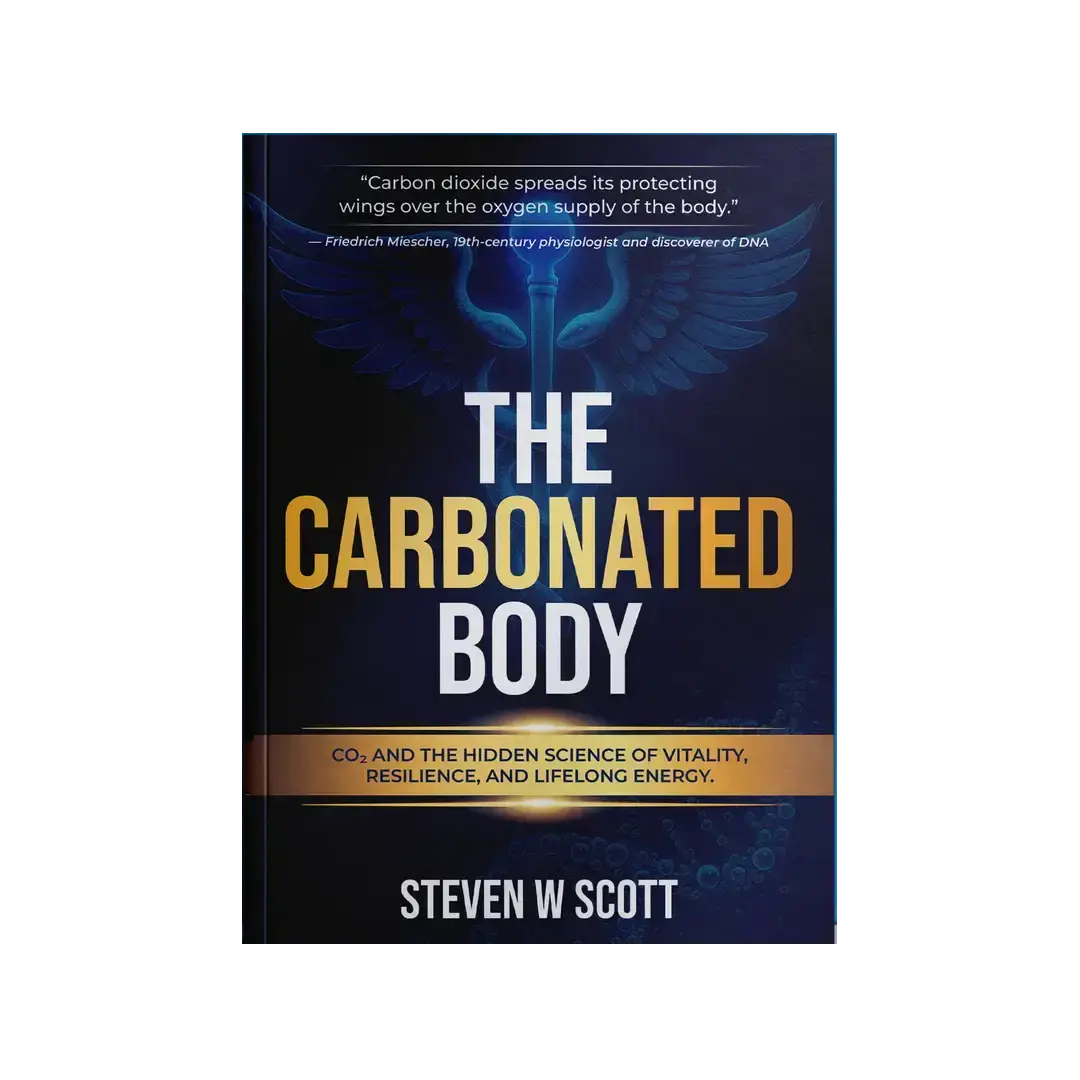
Supplements fail when the terrain collapses. This chapter reframes nutrient deficiency as a delivery problem rather than a supply problem. It suggests that without restored microcirculation, even perfect nutrition cannot reach its target, and that carbon dioxide plays a central role in reopening those pathways.
Stress does not stay in the mind. This chapter explores how emotional states alter blood flow, vessel flexibility, and clotting behavior. It hints at a direct link between unresolved stress and physical stagnation, and why carbon dioxide may dissolve these patterns by restoring physiological safety.
Blood does not merely flow, it carries charge. This chapter introduces circulation as an electrochemical system where energy, ions, and structure interact. It suggests that carbon dioxide preserves this hidden charge, turning the vascular system into a living battery rather than a passive pipeline.
Nitric oxide is often treated as the master regulator of circulation. This chapter challenges that assumption. It contrasts fast signaling with deeper systemic control and hints at why carbon dioxide may be the missing layer that determines whether blood flow is fleeting or sustainable.
The heart does not work alone. This chapter explores the overlooked role of breathing and the diaphragm in driving circulation throughout the body. It suggests that carbon dioxide synchronizes breath, pressure, and vessel tone, quietly turning respiration into a powerful circulatory engine.
When circulation slows, life follows. This chapter reframes blood flow as a dynamic river rather than a pressure driven system. It introduces stagnation as a hidden cause of degeneration and hints at why carbon dioxide restores flow not by forcing vessels open, but by changing the conditions that allow blood to move freely again.
We welcome thoughtful questions, collaboration ideas, research inquiries, and feedback related to The Carbonated Body
Sign up to our newsletter